
Searching for the Holy Grail of Tissue Engineering between Toronto and Berlin
Visiting Fellow Milica Radisic, a leading cardiac tissue engineer and professor from the University of Toronto, Canada, has joined forces with vascular biologist Holger Gerhardt, professor and group leader at the Max Delbrück Center for Molecular Medicine (MDC). Together, they want to tackle one of the key challenges in tissue engineering today: the stable vascularization of lab-grown human tissue. Their international collaboration, made possible by Stiftung Charité, brings together two fields that have long advanced in parallel: vascular biology and bioengineering. The team’s path towards scientific breakthrough is decidedly interdisciplinary. Before the four of us sat down for this interview, Ibrahim Maulana, the postdoctoral researcher working on the project, took the time to give me a tour of the lab in Berlin-Buch. He showed me the small plastic chips at the center of the team’s work: each chip contains precisely engineered microchannels designed to mimic the arrangement of cardiac tissue and perfusable blood vessels in the human heart. Instead of blood, a nutrient solution circulates through the channels, allowing the team to study how vascular and cardiac cells behave under controlled, physiologically relevant conditions. These chips and the team’s interdisciplinary approach are the basis for their investigation into key questions about human vascular and cardiac biology, from network formation to sex-specific responses. They aim to generate insights that will help scale engineered tissue, improve human-based models, and advance the field so that new regenerative therapies can be developed in the future.
In your proposal from when you applied for the Visiting Fellowship with Stiftung Charité, you refer to stable, perfusable blood vessels as the “holy grail” of tissue engineering. Why is that – and what are you trying to achieve with this project?
Gerhardt: Anything that grows beyond a certain size needs blood vessels to bring in nutrients and oxygen. If we want to grow tissues larger than microscopic pieces in the lab — for example, if we want to grow a liver for transplantation — we need a perfused vascular network. Building the organ tissue itself is something that the scientific community has achieved more readily. But vascularizing it — creating stable, functional blood vessels — has been extremely challenging. We have some ideas about why this is so complicated, and by bringing bioengineering and vascular biology expertise together, we believe we can crack this problem. That is why I was so keen to join forces with Milica.
Radisic: When I was a grad student twenty-five years ago, I honestly thought that by now, if you had heart or liver failure, you could go to the hospital and they would say: ‘Oh, no problem! We can grow replacement tissue for you.’ But this is not the case. We can still only make very small pieces of tissue, as thin as a human hair. If they get any bigger, the cells in the middle die because there is no blood supply. That is why I call it the holy grail. As things stand today, vascularization is the limiting factor in tissue engineering, regenerative medicine, and organ-on-a-chip models. If we could build stable, perfusable blood vessels, then we could scale tissue, connect organs into a body-on-a-chip, and reduce the need for animal experimentation. This remains the key challenge that stands between where we are now and truly transformative therapies.
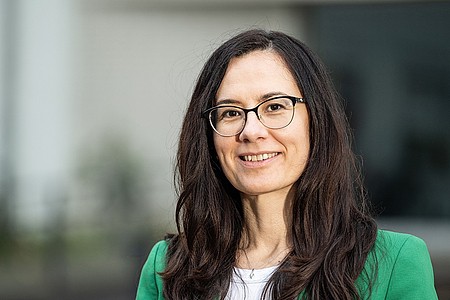
Funding program
Visiting Fellow
Host
Prof. Dr. Holger Gerhardt
Funding period
2024 – present
Specialism
Bioengineering / Cardiac Tissue Engineering
Project
Integrated use microfabrication and resident macrophages for engineering vascular networks in cardiac and lung tissues
Institution
Max Delbrück Center for Molecular Medicine (MDC)
2022 – present
Canada Research Chair in Organ-on-a-Chip Engineering
2017 – present
Director Ontario-Quebec Center for Organ-on-a-Chip Engineering
2014 – present
Professor, University of Toronto
So beyond improved in-vitro drug testing or personalized medicine, successful vascularization in the lab could also bring us closer to regenerating a patient’s heart or transplanting a lab-grown one after heart failure?
Radisic: Yes! If we are successful, eventually.
Gerhardt:When we are successful, not if. (laughs) But these organ- and vessel-on-a-chip models are not just about the big clinical vision. They also let us move into the human domain for discoveries in basic research. A central question is: how does a hierarchical vascular network form? In other words, how do vessels arrange themselves and choose their diameter so that blood can flow? Even today, the mechanisms that determine vessel diameter and how a network of vessels is maintained between branch points are not fully understood. With human vessel-on-a-chip models, we can study these open questions directly in human cells. And we can explore disease mechanisms in a human context, asking questions such as: how does this malformation in this particular patient actually manifest?
Another reason why we emphasize that the vessels need to be perfusable is that it is not only about what happens to the tissue. The vessels themselves change their behavior depending on whether they experience flow. A vessel that is not perfused will either die or start sprouting to seek out a new connection. The endothelial cells — the blood vessel lining cells — change state. A non-perfused vessel behaves like an inflamed vessel, and that is not what you want. Milica has published seminal work on how to reduce inflammation in engineered vessels, and we are implementing some of this. And we also incorporate the aspect of flow.

How did the heart become your organ of choice in your work, Professor Radisic?
Radisic: Life starts and ends with the heart. It is the first organ that begins to function in the womb. At around three weeks’ gestation, oxygen becomes so limited that a pump is needed to move blood, or the embryo’s development cannot continue. And when the heart stops, that is the end of life. This makes it the most important organ to me, and that is why my career centers around it. There are still so many unsolved scientific questions concerning the heart, and the bar to solving them is very high.
As for drug development: we need good human-based models in order to develop cardiac therapies. But we cannot simply take cardiomyocytes from people! Heart biopsies are very rare, and even if you obtain a small piece of heart muscle, those cells cannot be expanded: cardiomyocytes cannot divide, they are terminally differentiated. So the only way to grow more heart muscle is to generate cardiomyocytes from stem cells, that is, either from human embryonic stem cells or from induced pluripotent stem cells (iPSCs). These are stem cells generated from mature, specialized cells, like skin or blood cells, which have been reprogrammed to an embryonic-like state.
You said that tissue engineering is limited by a lack of stable blood vessels. How do you approach this challenge? What is the key difference in your approach compared to others?
Radisic: Organs are made up of many different cell types that support each other. We tend to focus on the main functional cells — cardiomyocytes in the heart, hepatocytes in the liver, neurons in the brain — but those cells cannot survive or function alone. They need support from their friends, so to speak. What is unique about our project is that we bring together four key cell types that are important in heart muscle: cardiomyocytes (the muscle cells that contract), endothelial cells (the cells that line blood vessels), fibroblasts (the support cells), and resident macrophages (immune cells that live in the tissue).
Only recently, through analysis of single-cell data, have people discovered that there are resident immune cells in almost every organ. These resident macrophages play a crucial role in keeping tissue healthy and supporting regeneration, and we think they may be critical for long-term vasculature stabilization in these co-cultures. But you cannot simply add them. Resident macrophages become resident by spending time in the tissue during development. So it is a bit of a chicken-and-egg situation: you need the tissue to educate the macrophages, and you need the macrophages to support the tissue.
Our goal is to create an environment where these different cell types can form the right circuit — where they recognize, communicate, and stabilize each other — so that every cell type can function as it does in vivo.
Gerhardt: Resident macrophages are very interesting. They are highly dynamic. While a vessel is still forming and not yet perfused, macrophages wrap around and interact with it; as soon as blood begins to flow, they step back — job done. Their behavior changes depending on the state of the tissue. In regeneration, tissue moves through different phases: an inflammatory phase and a resolution phase. Getting macrophages into the right state at the right time is one of the major challenges in the lab.
But it is not only about getting the cells into the right state; we also need the right kinds of cells for each organ. That is the question of organotypicity: a macrophage that supports regeneration in the liver is not the same as one in the heart. The same is true for the endothelial cells. We do not just need vessels, we need the right kind of vessels for the heart, with the proper endothelial identity and functional coupling. That is one of the bottlenecks in achieving stable, perfusable vascularization.
Maulana: How we as a team tackle these challenges — and what makes our approach unique — is that we integrate engineering strategies across different levels. At the cellular level, we guide iPSCs to develop into the four key heart cell types simultaneously. We do this through transcription factor overexpression, essentially giving the cells specific genetic instructions. This allows the right combinations of cells to emerge together, right from the start. At the tissue level, we engineer the micro-architecture to mimic the structure of the real tissue. That way, the cells ‘think’ they are inside a human body, not in an artificial setting — and when the context feels right, they begin to behave as they would in vivo.
Radisic: A big advantage here in Berlin is the iPSC Biobank: the quality of the cell lines we get here is excellent. We do not have access to this kind of resource in Toronto. Before, the tissues we made always involved a bit of mix-and-match: cardiomyocytes from one donor, combined with endothelial cells from another, and macrophages from a third. Now, all our cell types come from the same donor line. That makes a big difference in terms of consistency and what we can model — and is likely critical for establishing resident macrophages.
Gerhardt: Another aspect which we have not talked about yet is sex differences on a cellular level. In our work on heart failure, we have seen that endothelial cells respond differently to cardiometabolic stress in males and females, independent of hormones. These intrinsic cellular differences may help to explain why heart failure develops differently in women and men. With our model based on a single donor, we can address these sex-specific differences.
Exciting! It sounds like the scientific community still has lots of work to do.
Dr. Maulana, what is it like to conduct this project between Toronto and Berlin?
Maulana: I did my PhD in a bioengineering lab in Tübingen, in southern Germany, and it was always a dream of mine to work in an environment in which I could learn more about biology and put the technology into a better context. In Toronto, I switched from cancer immunology to cardiac tissue engineering, although I continued to use familiar technologies. I learned how to apply the organ-on-a-chip methods I knew in a cardiac context, and picked up microfabrication techniques I had not encountered before. Here in Holger’s lab in Berlin, I am now learning the biology — the reason for what I am trying to model. These are two very different but highly complementary experiences. Sometimes I joke that I am an exotic species: probably the only bioengineer in a biology lab!
Gerhardt: But you fit right in!
Radisic: In Toronto we have a very advanced cleanroom for microfabrication. We can do plastics processing, hot embossing, injection molding, and we have advanced 3D printers like NanoScribe and UpNano for two-photon polymerization, all under one roof. Ibrahim came to Toronto to make the master molds. That was back in January, not the best time of the year, I have to say. (laughs) It was freezing, but he managed! He brought the master molds back to Berlin, and we can use these to produce many more devices. It is like having a printing press — once you have the plate, you can produce as many chips as you need!
Professor Radisic, you have founded two companies, helped establish the CRAFT innovation center in Toronto, and built a training program in organ-on-a-chip engineering and entrepreneurship. How important is an entrepreneurial mindset in research?
Radisic: For me, engineering is applied science, and applied science must translate into something people can use. Otherwise it just stays on the shelf. That is why I wanted to translate our heart-on-a-chip technology. I wanted it to reach people. But when I first disclosed my intellectual property to the University of Toronto, the tech-transfer office told me it had ‘no commercial potential’. I still have that letter! At a point like that, you can either give up or prove them wrong. I was lucky enough to know people like Gordana and Bob,[1] who are based in the US, where the entrepreneurial spirit is generally very strong. Back then, venture capital was willing to take risks. So I found investors: the company was built and eventually acquired by an AI company called Valo Health. They just announced a €4.6 billion contract with Novo Nordisk for cardiometabolic drug discovery.
My example shows that it is possible to bring your discoveries into the health market, but it takes a lot of blood, sweat, and tears. Translating an academic idea into a product is extremely difficult — it is nothing like you see on TV. That is why I think students should learn about the business side of things early, alongside refining their scientific understanding and skills.
Professor Gerhardt, the Helmholtz Association and especially the MDC here in Berlin are planning a major expansion in biomedical engineering, including new research positions and a large AI-biomedicine initiative. How does your collaboration relate to these plans? And is Professor Radisic involved in shaping this vision?
Gerhardt: The timing for our collaboration could not have been better: Milica’s fellowship, our collaboration, and Helmholtz identifying bioengineering as a key area for the future all coincided nicely. Having Milica visit regularly stimulates a lot of new ideas. And with Ibrahim in the lab, I finally have someone on-site with direct engineering expertise who can judge things immediately. That means that I do not always have to bother Milica in a different time zone, which really helps.
We have just received major funding at the MDC — around €30 million — to establish theCenter for AI-Accelerated Molecular Innovations in Medicine (AI2M). Much of the work this new research infrastructure will house sits right at the intersection of AI and bioengineering, moving toward personalized medicine. So I can confidently say that this is an area for growth, with new recruitment and new investment. Hopefully we can continue to strengthen the partnership between Toronto and Berlin too.
Imagine yourselves in three or five years’ time. Your efforts have been successful. What would the headline be?
Radisic: What would CNN say?! Scientists achieved… what?
Maulana:Scientists model personalized cardiac and vascular function.
Gerhardt: (laughs) We will need a catchier title.
Radisic:Holy Grail found — in Berlin! Scientists create stable vasculature which lasts for weeks. (all laughing)
Gerhardt: We will see… but it already looks promising!
Dr. Inga Lödige and Dr. Nina Schmidt
October/November 2025
[1] Radisic is referring to Gordana Vunjak-Novakovic, Professor at Columbia University and leading tissue engineer and co-founder of several biotech companies; and Robert Langer, Professor at the Massachusetts Institute of Technology (MIT), who is one of the world’s most cited engineers and co-founder of numerous biotech companies, including Moderna.